
← Back to Weight Care & Safety
“How should I eat on semaglutide?” sounds like it should have a neat answer. In real life, it usually does not. Semaglutide is prescribed for different reasons, people start with different eating patterns, and side effects or appetite changes can make an old routine feel unfamiliar. A useful plan has to leave room for your health history, other medicines, food preferences, and the instructions from the clinician who prescribed it.
The goal is not to chase a perfect menu or force yourself into someone else’s rules. It is to build a calmer routine that helps you notice how you feel, gives your body regular nourishment, and makes it easier to ask for help when something is not working. This guide is educational, not a replacement for medical or nutrition advice tailored to you.
Start with the reason you are taking it
Semaglutide products are prescription medicines, and the way they fit into a care plan depends on the product and the person. The MedlinePlus drug information for semaglutide injection explains that people should use it as directed and speak with their doctor rather than stopping it on their own. That matters for food decisions too. A change in appetite may be expected, but it does not turn every nutrition question into something you have to solve alone.
The National Institute of Diabetes and Digestive and Kidney Diseases notes that weight-management medicines work best alongside healthy eating habits, physical activity, and a broader lifestyle program. That is different from saying there is one required “semaglutide diet.” Think of the medicine as one part of a plan, not a reason to ignore food quality, hydration, strength, sleep, or follow-up.
Before you make a major change, ask what outcome your own clinician is watching: blood glucose, weight, symptoms, cardiovascular risk, medication tolerance, or something else. That context changes what a sensible meal routine looks like.
Let a smaller appetite change the pace, not the value of food
Some people notice they become full sooner or feel less interested in food. That can be disorienting when you are used to larger portions or a fixed eating schedule. Rather than treating a lower appetite as a reason to stop paying attention to meals, use it as a cue to slow down. Sit down when you can, take a few bites, pause, and notice whether you are comfortably satisfied or beginning to feel unwell.
There is no prize for finishing a plate when you are uncomfortable, and there is no virtue in turning every meal into a test of willpower. A quieter meal pace can make it easier to notice fullness, reflux, nausea, or foods that do not sit well. It can also help you separate “I am not hungry right now” from “I have gone all day without enough food or fluid and now feel worse.”
If early fullness, nausea, vomiting, constipation, or abdominal pain are persistent or disruptive, bring that information to the care team instead of trying to manage it with increasingly restrictive rules. The manufacturer’s safety information for Wegovy lists gastrointestinal symptoms among common side effects and advises patients to discuss side effects that bother them or do not go away.
Build meals around what you can return to consistently
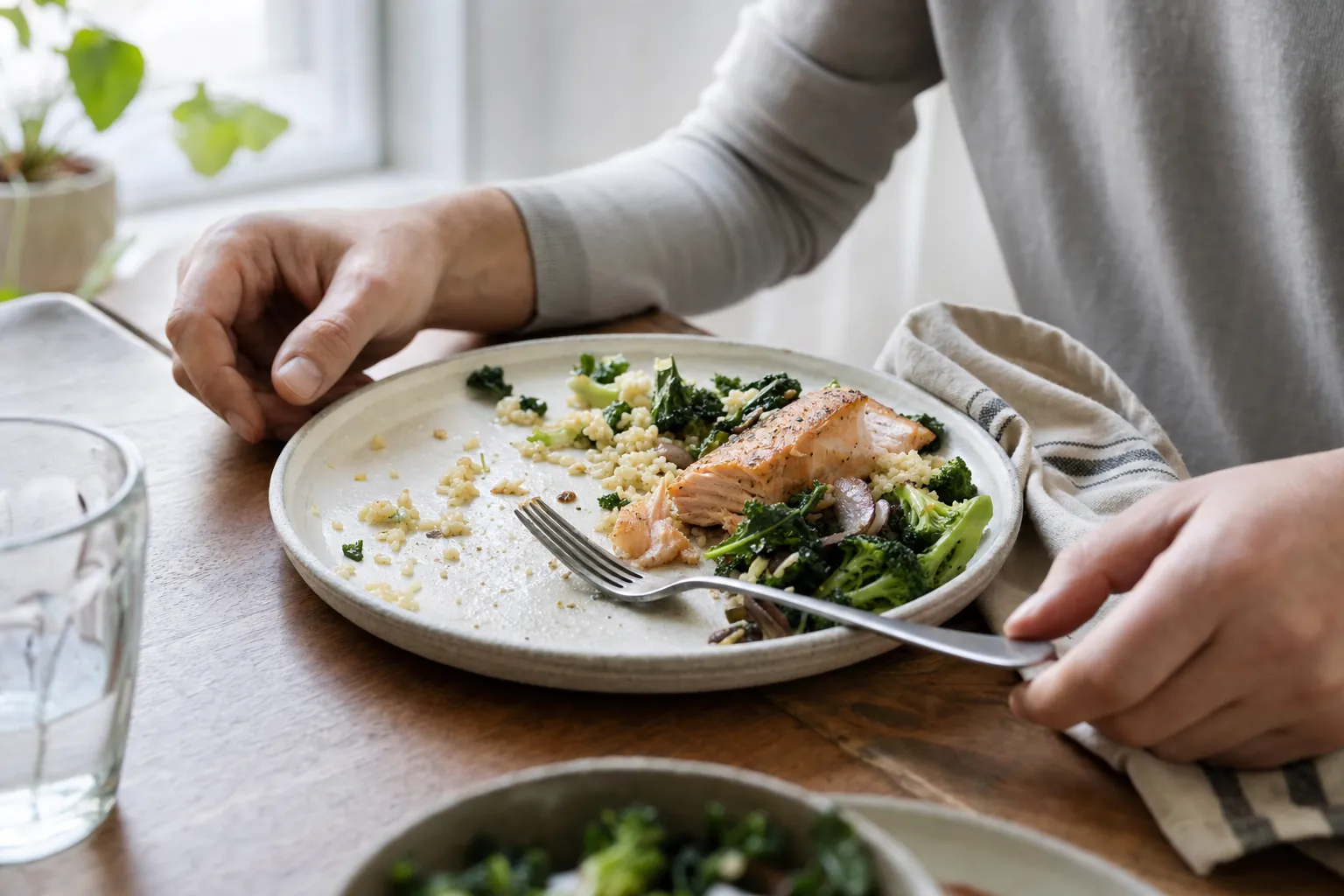
When appetite is unpredictable, elaborate plans often fail first. Start with ordinary foods you already tolerate and can keep on hand. A useful meal may include a source of protein, fiber-rich plant foods, and enough carbohydrate or fat to feel satisfying, but the exact combination should fit your dietary needs and medical guidance. Someone with diabetes, kidney disease, digestive disease, food allergies, or a history of disordered eating may need a very different plan from a friend taking the same medicine.
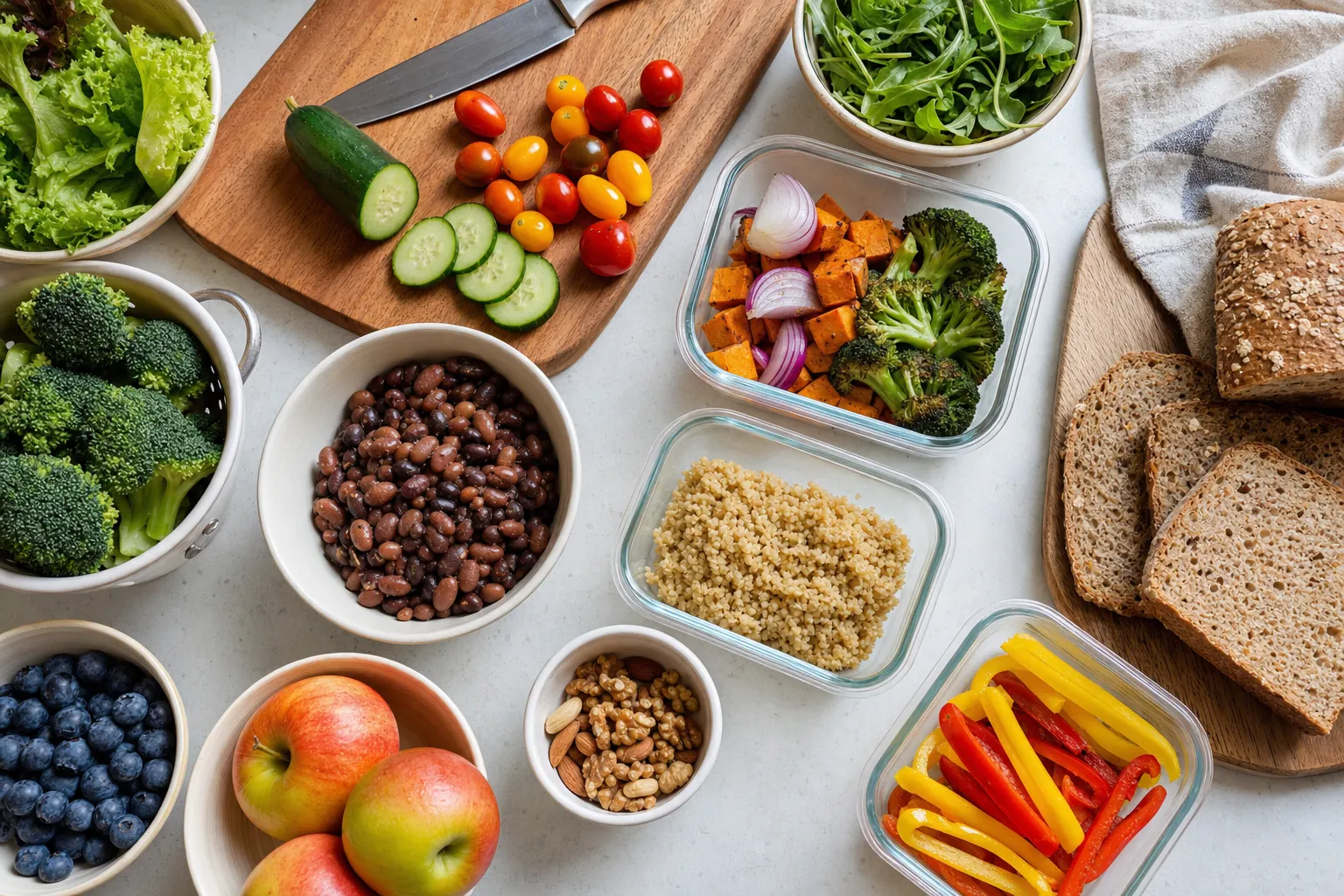
Instead of trying to memorize a list of “good” and “bad” foods, make the next meal easier to assemble. Keep a few reliable options at home, such as eggs, yogurt, beans, fish, tofu, chicken, soups, vegetables, fruit, oats, rice, potatoes, or whole-grain bread, depending on what works for you. Convenience matters. Food that is available and tolerable is more helpful than a perfect grocery list that stays untouched.
The site’s recipe ideas can offer simple starting points, but they are not a prescription. Use them as inspiration, then adjust portions, ingredients, and timing with your own needs in mind. If food feels unusually difficult, a registered dietitian can help make a plan that is realistic rather than rigid.
Make hydration a routine, not an afterthought
When meals get smaller or nausea is present, drinking enough can be easy to overlook. Keep a drink available at the times you are most likely to forget: beside your morning routine, on your desk, in the car, or with an afternoon snack. Small, regular sips may feel more manageable than trying to catch up all at once.
What counts as the right amount is personal. Heart, kidney, endocrine, and medication-related conditions can change fluid guidance, so do not copy a large daily-water target from a video or challenge. Ask the clinician who knows your health history what they want you to watch for. Signs such as ongoing vomiting, inability to keep fluids down, dizziness, fainting, or symptoms that feel severe deserve prompt medical advice rather than more self-experimenting.
Hydration is also a practical reason to keep your care team’s contact instructions easy to find. The GLP-1 medication guide is a good place to organize the questions you want answered before a routine concern becomes an urgent one.
Plan for lower-effort meals before you need them
The best time to decide what you can manage on a rough day is not when you are already tired, nauseated, or staring at an empty refrigerator. Create a short list of lower-effort foods that are acceptable to you and that fit any instructions from your clinician. That might mean a simple soup, toast and eggs, yogurt and fruit, beans and rice, a smoothie approved by your care team, or a prepared meal you know you tolerate.
This is not about lowering the bar on nutrition. It is about recognizing that consistency comes from practical planning. A routine that only works on high-energy days is not much of a routine. The more friction you remove from groceries, cooking, and cleanup, the easier it is to respond to appetite changes without falling into an all-or-nothing pattern.
Make the plan specific enough to use. Pick two breakfasts, two lunches, two dinners, and one or two snacks that work with your schedule. Put the ingredients on a recurring grocery list or save the options in a note on your phone. When your appetite is lower than usual, a short familiar list can be more useful than scrolling through meal ideas until you are too tired to choose.
It can help to write down what you ate, how you felt afterward, and any symptoms that followed. Keep it simple: a few words in a notes app is enough. The record is not a scorecard. It is useful information to bring to a prescriber or dietitian if you need help spotting patterns.
Be careful with one-size-fits-all protein, calorie, and supplement advice
Online plans often promise a universal protein target, a mandatory calorie number, or a supplement stack for everyone taking a GLP-1 medicine. Those claims sound efficient because they eliminate uncertainty. They also leave out the details that actually matter: body size, age, kidney function, diabetes medicines, activity, appetite, digestive symptoms, and whether you are meeting your needs without forcing food when you feel ill.
Protein and other nutrients are important, but the right amount is not a comment-section contest. If you are concerned about eating too little, losing strength, feeling unusually fatigued, or relying on supplements because food has become difficult, bring that concern to your clinician. The same applies to vitamins, powders, herbal products, or over-the-counter remedies. A pharmacist can help check whether a product is appropriate with your medicines.
For a broader foundation, the site’s medical weight-loss overview explains why medication decisions belong in the context of your health history and ongoing support, not just a number on a scale.
Know when food questions are really care questions
Some questions can wait for your next appointment. Others should not. Contact the clinician who prescribed the medicine if you have persistent vomiting, cannot keep fluids down, feel signs of dehydration, have severe or persistent stomach pain, or have symptoms that concern you. Follow the instructions you were given for urgent and emergency care. Do not change your dose, double a dose, or stop a prescription because an online plan says it worked for someone else.
It is also worth calling when your day-to-day eating has changed so much that you do not know how to keep up with it. A good care team would rather hear about a problem early than after you have spent weeks trying to fix it through guesswork. Bringing a few concrete notes about meals, fluids, symptoms, timing, and other medicines can make the conversation more useful.

Questions to bring to your next appointment
- What appetite or digestive changes should I expect with my specific medicine?
- What symptoms mean I should call the office, pharmacy, or an urgent-care service?
- Are there foods, drinks, supplements, or alcohol considerations that apply to my health history?
- How should I handle days when I have very little appetite or cannot keep fluids down?
- Would a referral to a registered dietitian help me make a plan that fits my needs?
- Who should I contact if I have questions about dose instructions, storage, or a missed dose?
How Anthony’s resources can help
Anthony Colón, RN shares education to help people prepare for clearer conversations about medication, nutrition, telehealth, and long-term weight care. The GLP-1 medication guide is a useful next step when you want a plain-language overview before speaking with a qualified clinician. The 6-Step Journey brings that information into a calmer sequence so you do not have to sort through every question at once.
A meal routine does not need to be impressive to be helpful. It needs to be workable for your body, your life, and your care plan. Start with what you can repeat, write down what feels difficult, and give your care team the details they need to help.
Frequently asked questions
Do I need a special diet while taking semaglutide?
There is no one meal plan that fits everyone taking semaglutide. Your health history, reason for treatment, other medicines, appetite, digestion, and nutrition needs all matter. Ask your prescriber or a registered dietitian what approach makes sense for you rather than copying a plan from social media.
What should I do if I feel too full or nauseated to eat?
Do not try to push through persistent symptoms by changing your medicine or skipping care. Contact the clinician who prescribed it for advice, especially if you cannot keep fluids down, have persistent vomiting, or have symptoms that feel severe or unusual. They can help you decide what needs attention.
Should I skip meals if I am not hungry on semaglutide?
A major appetite change is worth discussing with your care team. Skipping food all day and then trying to catch up later can make it harder to notice how you feel and to keep a steady routine. A clinician or dietitian can help you plan around reduced appetite without giving you a generic target that ignores your health needs.
Can I drink alcohol while taking semaglutide?
Alcohol is a personal safety question, not a universal food rule. It can be more complicated if you have diabetes, take other medicines, have nausea or vomiting, or have a history of pancreatitis or liver disease. Ask the clinician or pharmacist who knows your medicines and health history before making alcohol part of the plan.
Related posts

Weight Care & Safety
How to Evaluate a Telehealth Weight-Loss Program
A practical safety checklist for understanding the clinician, evaluation, follow-up, pharmacy, costs, and claims behind an online program.
Read the article →